
Singapore’s EV adoption going at ‘right pace’ but more must be done: Panellists at ST roundtable
Source: The Straits Times
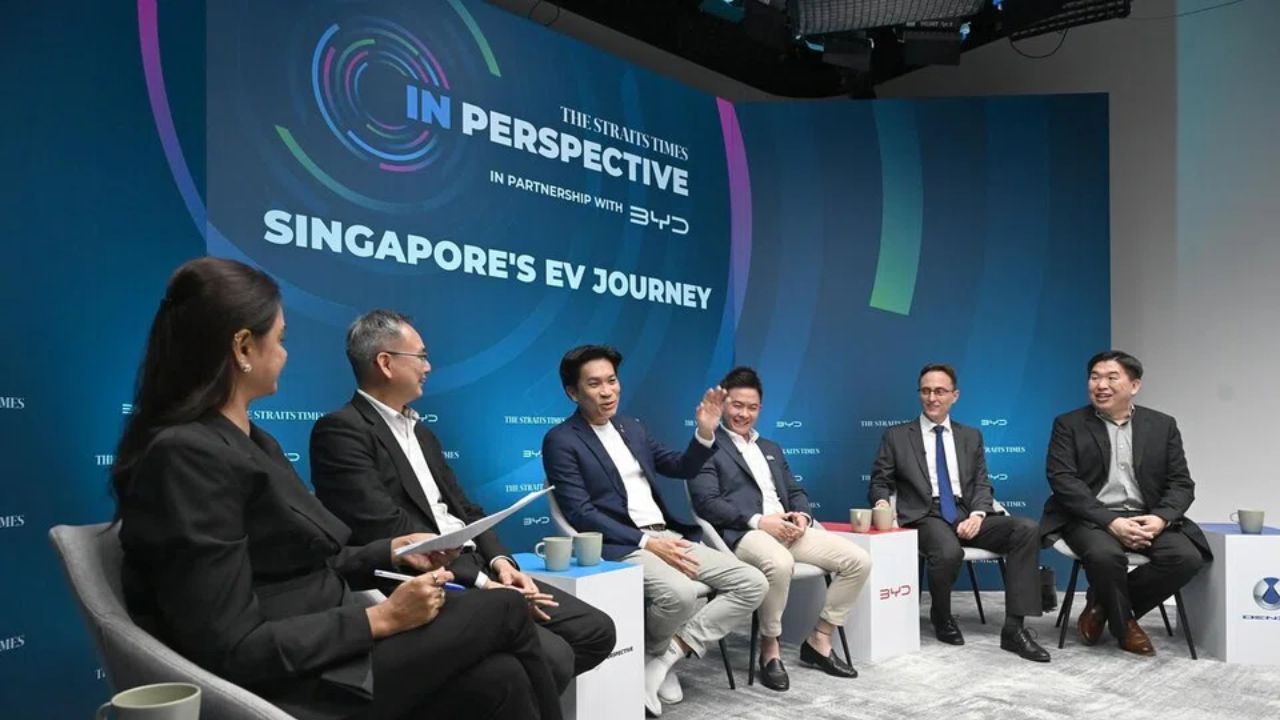
Singapore’s adoption of electric vehicles (EVs) is going at the “right pace”, say industry experts, although some roadblocks in the charging of such vehicles remain.
These include patchy public education on EV charging, payment problems on charging apps, and the lack of integration across the platforms of various charging operators, said panellists at an In Perspective roundtable with The Straits Times on March 27.
Dr Tobias Massier, principal scientist at research platform TUMCREATE for collaborations between Singapore and the Technical University of Munich, said EV adoption here is “moving forward at the right pace”. He added that even though it is on the path of “exponential growth”, it is “not rushed”.
He described Singapore as “one of the best places” to make the EV switch, saying the country is small enough that range anxiety – or fear that a vehicle may run out of charge before reaching its destination – is not an issue.
But he also pointed to the need for a more integrated EV charging system. For instance, he suggested, there should be a unified app platform – integrating all EV chargers under various operators – that displays which charging spaces are available.
Incentives such as lower prices for users who charge their vehicles during off-peak hours or subscription-based charges for those with regular travel and charging habits also help manage demand and optimise the existing power grid, added Dr Massier.
Mr Julian Kho, editor of automotive platform Sgcarmart, pointed out that some users may have trouble finding a working or available EV charger.
He said he had once been unable to pay for an EV charger even though the space was available. And on other occasions, he had to “queue” for an occupied space to free up instead.
Mr Lam Wee Shann, deputy chief executive of technology at the Land Transport Authority (LTA), noted that while Singapore has seen “healthy momentum” in the take-up of EVs, the areas to continue working on include ensuring battery safety and deploying more chargers.
He also noted that from the policy perspective, the planning of charging infrastructure needs to integrate upcoming advancements in technology.
These include potential improvements which would allow more energy to be stored within a smaller battery mass, which translates into covering a longer distance on a single charge, he said.
Mr Lam then took a question from panel moderator Shefali Rekhi, editor of the Asia News Network, on factors behind successful EV adoption in Singapore.
The authorities aim to use easily understandable EV adoption policies to incentivise more motorists to consider EVs, he said.
With the law banning the registration here of new cars that rely solely on petrol engines from 2030, along with rebates of up to $30,000 received from schemes, he said potential users have some time to think about buying an EV when the certificate of entitlement (COE) cycle of their current vehicle ends.
Other panellists then weighed in on what improvements might persuade drivers to make the EV switch.
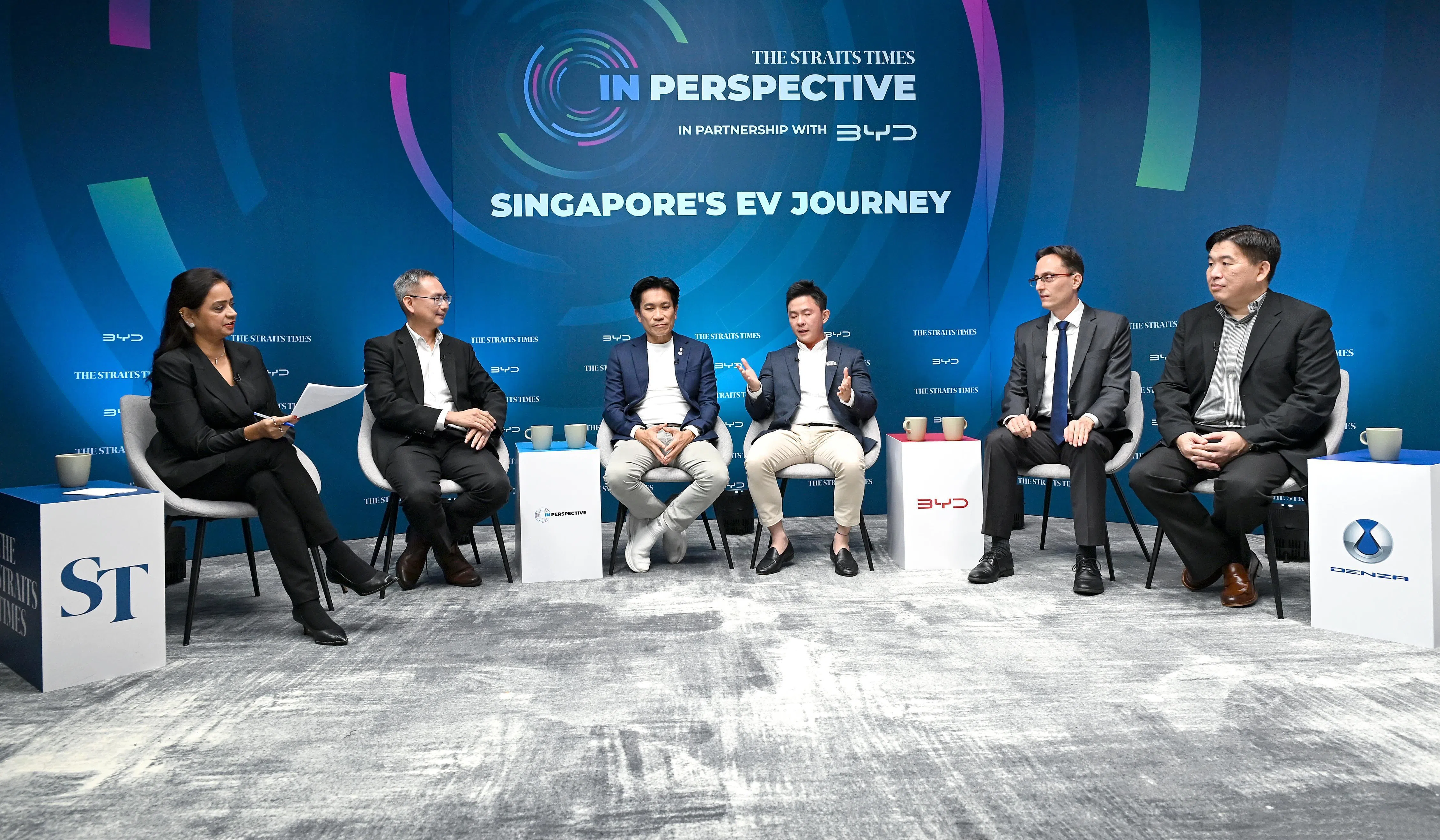
Mr James Ng, managing director of BYD Singapore and the Philippines, said BYD is rolling out mega-fast chargers in China which take less than 10 minutes to fully charge an EV, and that he hopes these will come to Singapore “pretty soon”.
Mr Tyron Tan, an opportunity catalyst at EV ecosystem platform VoltBridge, also shared an experience he had with a user-friendly payment method for EV charging at a shopping mall in Singapore – it allowed him to tap his credit card for payment and charge his EV without downloading any app.
Noting that such improvements “make life a lot easier for everyone”, he said these have to go hand in hand with user education to teach EV drivers about the batteries in their vehicles and how to charge them properly.
For example, drivers need to learn the maximum charge for their EV and understand that hooking it up to a fast charger may not necessarily translate to charging their vehicle within 10 minutes, added Mr Tan.
And education is needed to change the mindsets of those who have been pumping petrol into their vehicles for their whole life – to teach them that it does not take a long time to charge an EV, he said.
Mr Lam said LTA is trying to balance localised demand for EV chargers, the ability of the power grid to provide enough energy and business propositions for operators to set up chargers at specific locations.
He added that the average utilisation rate of existing EV chargers is only around 10 per cent at present.
LTA is also conducting an internal workshop to tease out prevalent charging behaviours to collectively optimise resources for EV charging, he said.
Panellists also spoke of issues which can make it challenging to sell EVs on the resale market.
For instance, Mr Kho said there needs to be a single trusted standard of battery degradation to evaluate the actual health of an EV’s battery, instead of the current arrangement where various original equipment manufacturers have their own standards. Such data should also be made more accessible to third parties and buyers, he added.
He said this is essential to determine the depreciation of used vehicles, allowing dealers to price them accurately and bringing certainty to potential buyers.
On that note, Mr Ng said BYD will be setting up an authorised pre-owned car agent to “properly check” all second-hand BYD vehicles and “upkeep the scrap values”.
He noted that this will assure potential buyers that these pre-owned cars are properly inspected, verified and supported, particularly in areas such as battery health, safety standards and product authenticity. More details will be provided later.
And for those who want to renew their COE after their 10-year cycles are up, Mr Ng said BYD is coming up with a system to determine the cost of changing the EV’s battery at a wholesale price.
On the issue of charger hogging, Dr Massier said that in future, autonomous vehicles could have self-driving functions that would have them move away from chargers once they are charged to a certain level.
He hopes to see EVs become the new norm, such that charging one’s vehicle is no different from refuelling at a petrol station.