
Singapore tightens monetary policy for first time since 2022, raises inflation forecasts amid Iran war oil shock
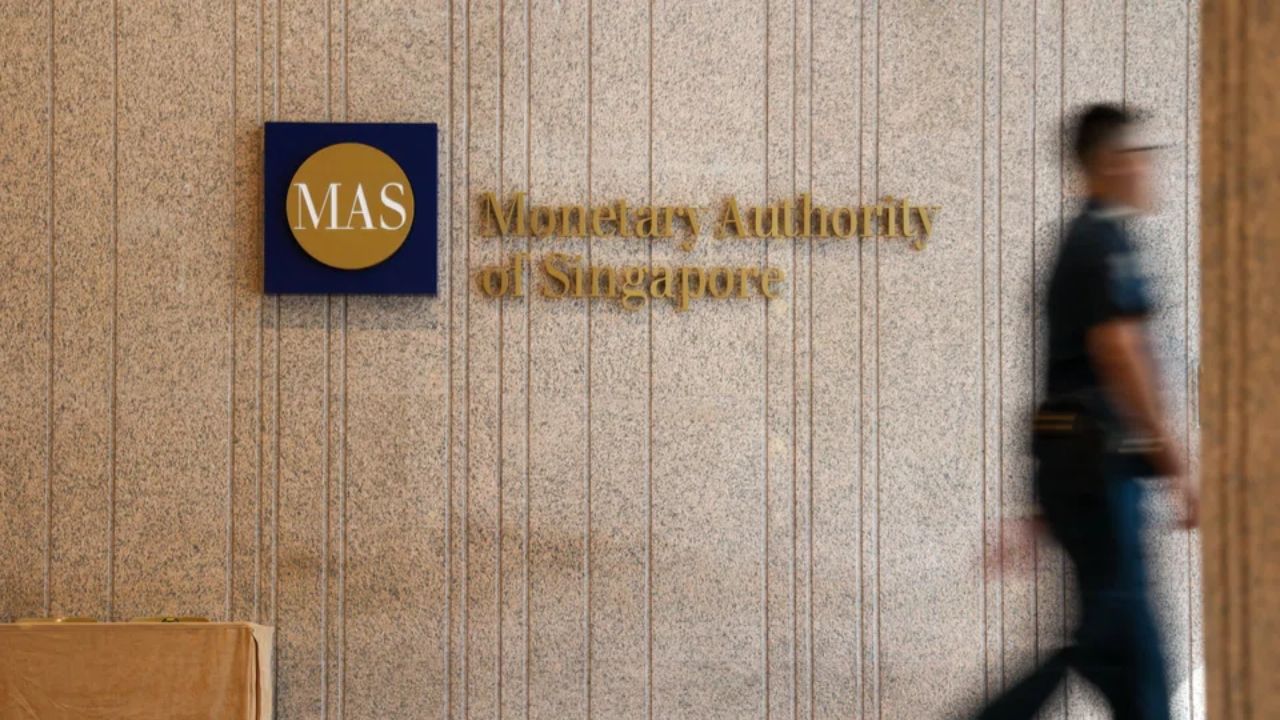
Source: The Business Times
The Monetary Authority of Singapore (MAS) tightened monetary policy on Tuesday (Apr 14) and raised its inflation forecasts, as the Middle East conflict and disruption to shipping through the Strait of Hormuz drive up imported energy and commodity costs.
The central bank increased slightly the rate of appreciation of the Singapore dollar nominal effective exchange rate (S$NEER) policy band, while keeping its width and centre unchanged. It is the first tightening since October 2022, when MAS wrapped up a cycle of five consecutive moves to combat post-pandemic inflation.
MAS raised its forecasts for core inflation and headline inflation to 1.5 to 2.5 per cent for 2026, from the 1 to 2 per cent range set in January.
The move was in line with expectations from 15 of 18 economists polled by Bloomberg.
In reports published prior to the decision, several economists called for a 50-basis-point steepening of the slope to an estimated 1 per cent per annum, from 0.5 per cent previously.
MAS said Singapore’s imported prices of crude oil, natural gas and fuel have risen sharply and will directly add to electricity and gas as well as transport-related consumer price inflation in the months ahead.
Even if supplies from the Middle East are restored, global energy prices are likely to remain elevated for some time, the central bank warned. It noted that deliveries will be lagged, supply will take time to recover fully, and governments seeking to rebuild energy reserves will add to pent-up demand.
“As higher energy costs pass through supply chains worldwide, a broader range of Singapore’s import costs will increase,” MAS said.
The central bank also flagged significant uncertainty around the outlook for shipping flows through the Strait of Hormuz.
It noted that accumulated energy supply shortfalls and higher input costs will continue to weigh on the Singapore economy, dragging on energy-dependent industries such as petrochemicals and transport.
These uncertainties are likely to weigh on growth as well. MAS said gross domestic product growth in 2026 is likely to step down from the above-trend pace recorded in 2025, with the positive output gap narrowing.
Advance estimates from the Ministry of Trade and Industry (MTI) showed the economy expanded 4.6 per cent year on year in the first quarter, though it contracted 0.3 per cent on a quarter-on-quarter seasonally adjusted basis.
An update to the earlier GDP forecast of 2 to 4 per cent will be provided in May.
The central bank said it “stands ready to curb excessive volatility in the S$NEER” and will continue to monitor economic developments.
Elevated prices
Vishnu Varathan, head of macro strategy for Asia ex-Japan at Mizuho Securities, said the tightening move was “neither surprising nor aggressive”, given that the slope increase restores what he estimates to be the previous rate of appreciation of about 2 per cent per annum, after MAS had reduced it in the first half of 2025.
The decision not to recentre the S$NEER midpoint upwards reflected “considered restraint” by the central bank, he added.
Varathan said MAS appears to be weighing the risk of adverse demand shocks, where several negative forces could compound one another: higher energy costs crimping output, tighter financial conditions and a possible retreat in artificial intelligence-related capital spending.
He noted that the central bank’s reference to a “more persistent disruption to energy supplies” deepening the drag on growth suggests the central bank recognises that inflation risks could ultimately prove deflationary through the demand channel.
MAS – which uses the exchange rate rather than interest rates as its main policy tool – had held its settings steady since July last year, after two consecutive easings in January and April 2025.
At its last policy meeting in January, the central bank flagged that geopolitical developments could pose upside risks to inflation.
Core inflation held steady at 1.2 per cent year on year in January and February, unchanged from the preceding quarter.
MAS noted that prior to the Middle East conflict, import costs for oil and food had been declining on a year-ago basis. But prices have since shifted sharply, and it expects core inflation to pick up and remain elevated over the next few quarters.
On private transport costs, MAS said inflation will come in higher due to the hike in fuel prices, though this will be offset to some extent by subdued accommodation inflation amid weaker housing rental growth over the past year.
Oil prices have surged about 40 per cent since the US-Israeli military strikes on Iran began on Feb 28 and the subsequent effective closure of the Strait of Hormuz.
Brent crude was back above US$100 a barrel on Sunday, after US President Donald Trump threatened a naval blockade of Iranian ports.