
Singapore to monitor employment, wage growth as it rolls out AI programme: Josephine Teo
(Photo credit: ST Photo/Brian Teo)
Source: The Straits Times
Sustained employment and wage progression are among the indicators the Government will continue to monitor as it pushes ahead with plans to train 10,000 “AI bilingual” workers.
Under the National AI Impact Programme (NAIIP), the Government intends to equip the workforce with artificial intelligence know-how to solve problems and redesign work processes for more efficiency.
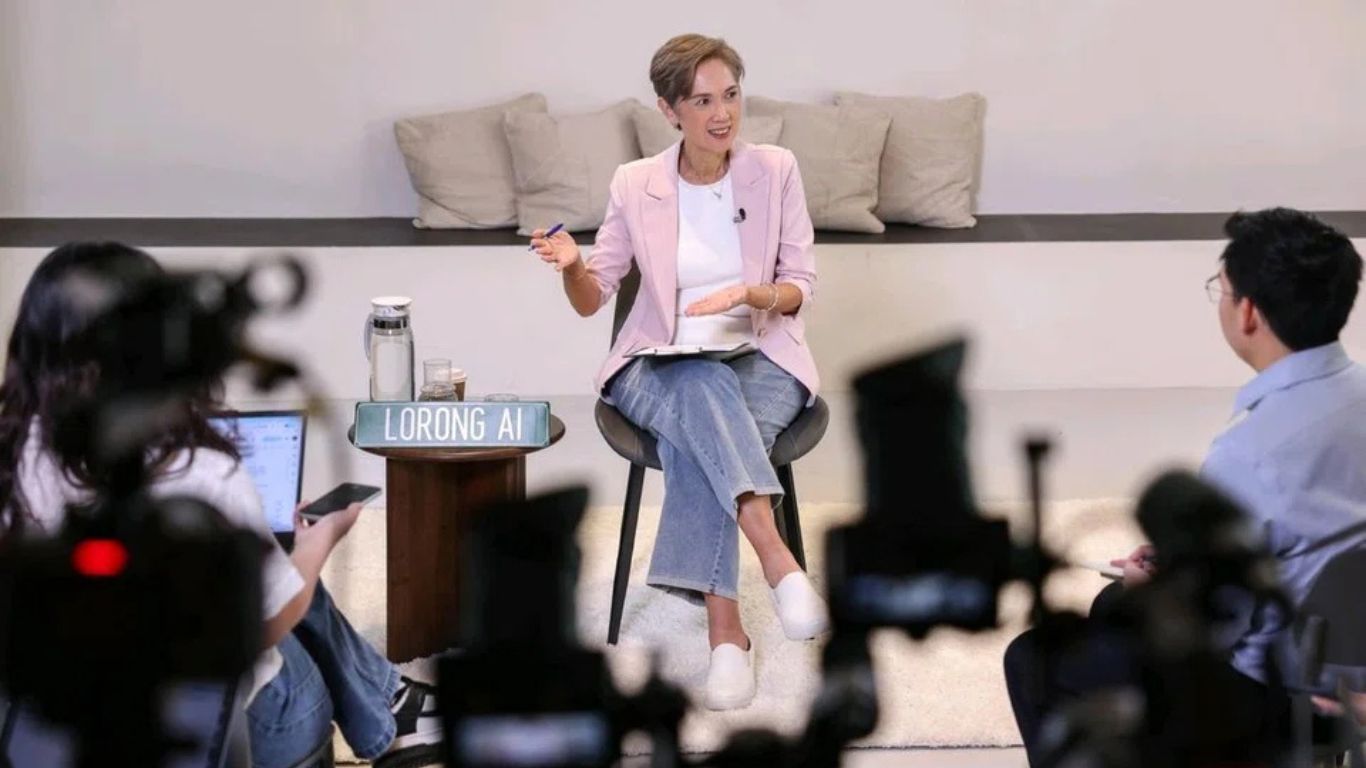
There is no single metric to evaluate the success of the national initiative, but the Government would continue to monitor if employment rates stay high, said Minister for Digital Development and Information Josephine Teo during a media interview on March 27.
“Ultimately, what people want is an assurance that they will still be able to do meaningful work,” said Mrs Teo. “Over time, we also want to make sure that Singapore continues to provide good opportunities for people to advance – and advancement must certainly involve wage levels. We will be looking at these broader indicators of whether, as a whole, the economy is still able to create and sustain good jobs, and that individuals who are part of the workforce continue to be able to make progress.”
For a start, AI fluency programmes will be crafted for the accountancy and legal professions.
The NAIIP also covers plans to equip 10,000 enterprises with AI smarts over the next three years. These include grants for the adoption of AI tools such as chatbots and for market research.
The Government has lofty ambitions in developing AI fluency within the population, but Mrs Teo acknowledged that there will be challenges along the way. These include figuring out a “minimum vocabulary” of AI know-how that professionals should have.
This is similar to learning a language, where fluency means knowing a minimum number of words, she said. For example, having professional proficiency in English generally requires one to know around 5,000 words.
“Depending on the language, the minimum vocabulary is different… For a professional accountant, what is the AI minimum vocabulary (needed) in order to be effective?” said Mrs Teo, noting that the standard for lawyers would be different.
During the Budget debate earlier in March, Mrs Teo said the AI fluency programmes for the accountancy and legal sectors will be developed together with professional bodies such as the Institute of Singapore Chartered Accountants, the Singapore Academy of Law and the Singapore Corporate Counsel Association.
Accountants will learn to use AI in areas such as financial reporting and compliance monitoring, and lawyers will tap AI for research, document review and contract management. Said Mrs Teo: “If we work together with professional bodies, we have a better chance of identifying the correct way.”
For companies, the challenge lies in putting together a set of affordable and safe AI tools that can be easily customised to specific sector needs, she said, adding that this is especially important for small and medium-sized enterprises that might not be able to purchase costly bespoke AI tools.
This is part of the reason why OpenClaw has received so much fanfare, said Mrs Teo, who compared it to IKEA furniture for its relatively simple building process that comes with instructions.
Since its launch in November 2025, the AI agent tool has received much hype globally for its ability to execute tasks such as sending e-mails and booking flight tickets on behalf of users.
Despite its ease of use, Mrs Teo said “the problem is that it’s not quite IKEA”, noting that safety concerns have been raised about OpenClaw.
“We will need to get to a point where there is assurance that tools used by enterprises have a certain label that says that it’s been tested and it’s not going to end up causing you to suffer harm.”