
British PM Keir Starmer resigns, paving way for orderly transfer of power
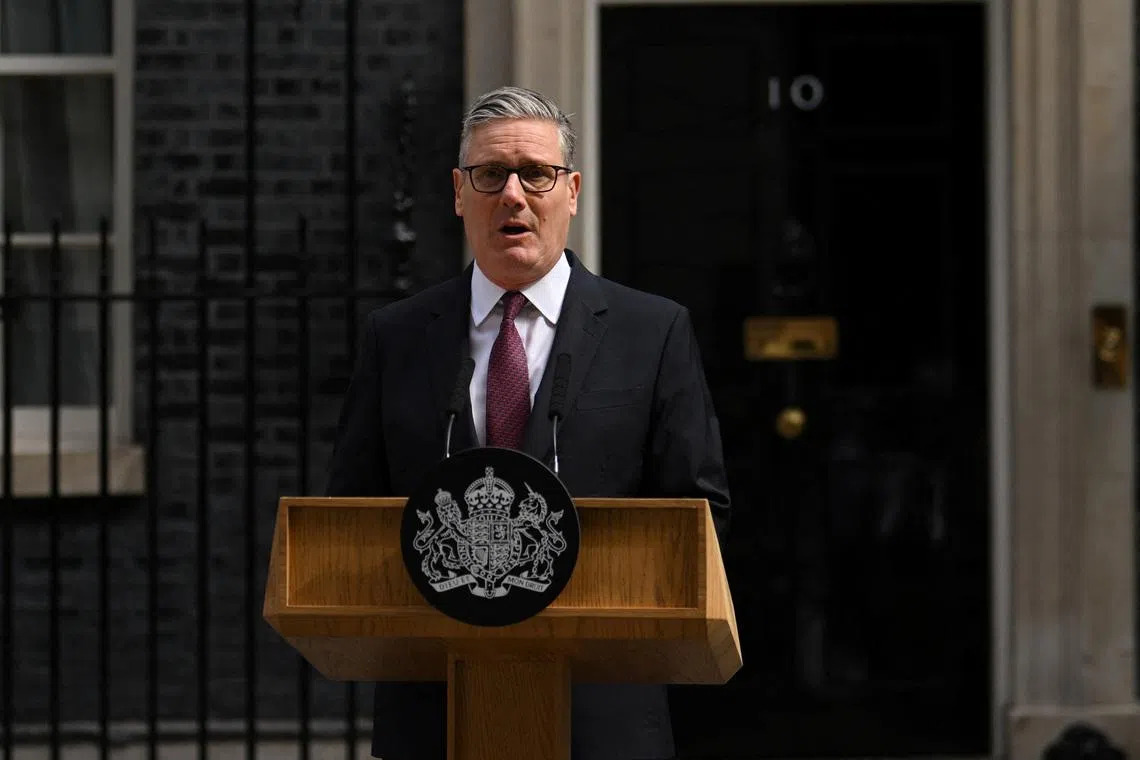
British Prime Minister Keir Starmer announcing his resignation outside 10 Downing Street on June 22. (PHOTO: AFP)
Source: The Straits Times
Prime Minister Keir Starmer said on June 22 he would resign, paving the way for what is expected to be an orderly transfer of power to front runner Andy Burnham, who could soon become Britain’s seventh leader in 10 years.
In an emotional speech, Starmer said he had listened to his governing Labour Party and realised that he was no longer the man who should lead it into a national election due in 2029.
After making his announcement on the steps of his Downing Street office and London residence, Starmer’s move to stand down could have triggered a divisive leadership contest, but several Labour lawmakers said they now expected more of a coronation.
Burnham, a 56-year-old career politician, quickly won the support of another potential leadership rival, former health minister Wes Streeting, with one Labour lawmaker saying it was more likely the former Greater Manchester mayor would now be installed as leader.
Political churn
By installing Britain’s seventh prime minister since the Brexit vote to leave the European Union 10 years ago, the Labour government is the latest to fall foul of voter anger over politicians’ failure to deliver on their promises of change.
Starmer said he would ask the Labour Party’s organising committee to set out a timeline for a leadership contest to find his replacement.
Nominations would open on July 9, close by mid-July, and if there is a contest, a new leader will be in place by September.
A coronation, where Starmer’s successor is appointed without a contest, could mean a new leader would enter office by mid-July.
“The question my party is asking now is whether I am best placed to lead us into the next general election. I have heard the answer of my parliamentary party to that question, and I accept that answer with good grace,” Starmer said.
After describing the achievements his government had secured in his two years of power, a man who was often criticised for being robotic became visibly emotional, his voice cracking when he thanked his family for their support.
“When I leave the biggest job in the country, I will spend more time on the most important job, being the best husband I can to my fantastic wife, Vic, who has been a rock by my side through good times and bad, and being the best dad I can to my beautiful children, who are my pride and my joy.”
Starmer spent the weekend with his wife, Victoria, at his country residence to consider his future. With support draining away, he realised the political reality of his position.
There was some sadness in the Labour ranks, with industry minister Chris McDonald saying his speech underlined the fact “he’s a really decent man”.
However, others said he had been treated the way he treated others as prime minister, being “royally done over”.
The threat to Starmer, which has been building for months, increased sharply on June 19, when Burnham decisively won a parliamentary election to return to Westminster, beating a candidate from Nigel Farage’s Reform UK party, which has led national opinion polls for more than a year.
That victory gave hope to Labour lawmakers that Burnham, a career politician known for his communication skills, could transform the fortunes of a party that has lost support under Starmer, whose popularity ratings have sunk to the lowest for any British leader.
The pound rose against other currencies and British government bonds rallied after Streeting’s announcement, as investors welcomed a more certain path to Burnham’s premiership.
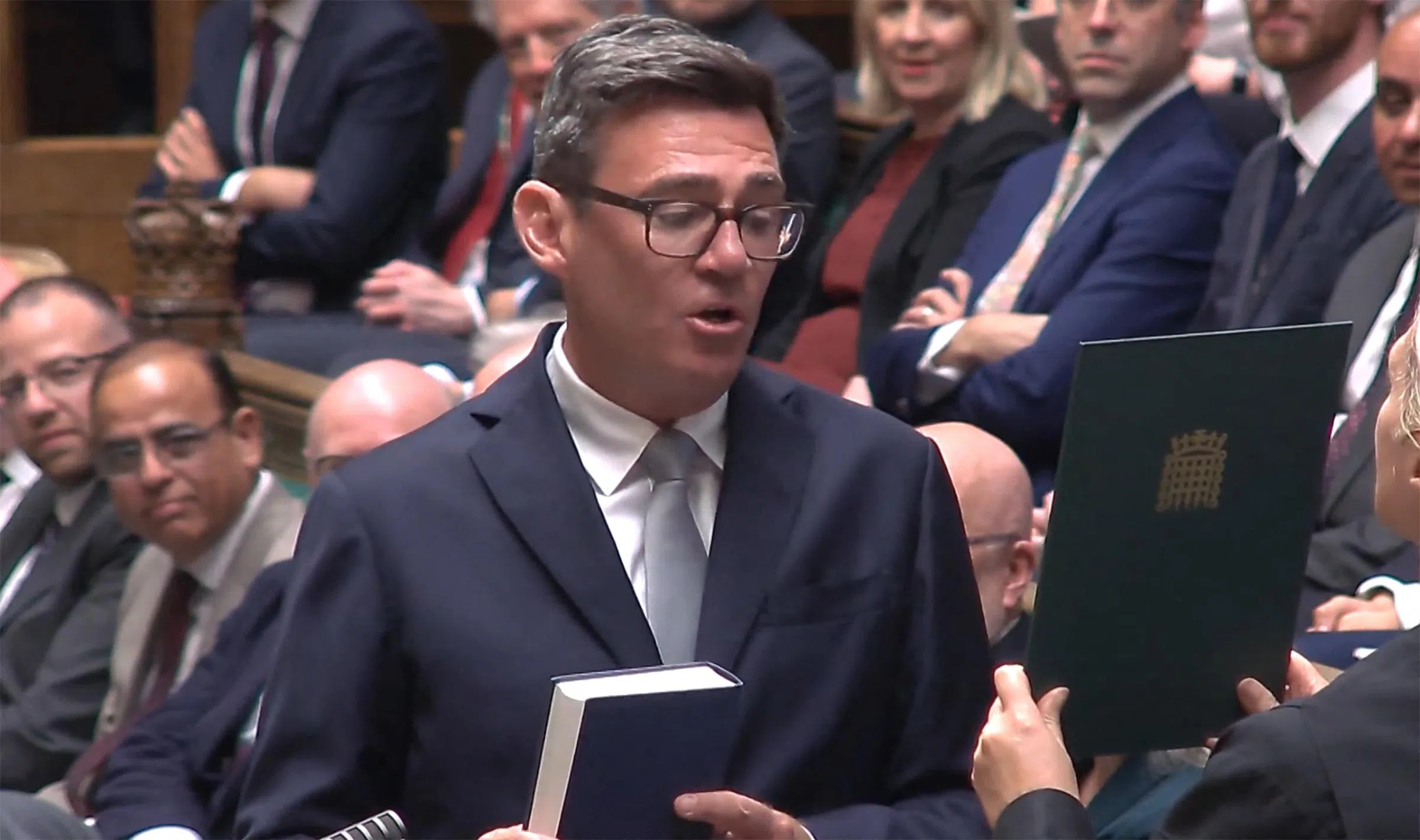
Andy Burnham being sworn in as new Labour MP for Makerfield in Parliament in London on June 22. (PHOTO: AFP)
Despite hoping for a smooth handover, the change of leader is not without risk.
If other candidates decide to enter any leadership race, the party could end up with a divisive contest that could paralyse government, although Streeting’s move appeared to reduce the likelihood of that and suggested to some Labour lawmakers that the former health minister had been offered a job by Burnham.
Reform’s Farage immediately called for a national election.
“I’ve had enough of waiting around. Britain needs change – real change, not another washed-up has-been shoved into place by the uniparty,” he said in a statement.
Beyond saying that the country needs fundamental change and to bring down the cost of living, Burnham has yet to make clear his approach to foreign affairs, the economy and defence.
He was in London on June 22 to take up his newly won seat for the north-western English area of Makerfield.
Like Starmer, he could find he has little room to manoeuvre, hemmed in by bond market investors opposed to any additional borrowing, and confronted by an angry electorate which believes the country is not working properly.
Britain already has the highest borrowing costs in the Group of Seven wealthy nations due to its high debt and interest payments, years of anaemic economic growth, its struggles to cut spending and the need to invest in areas like defence.
Investors spoken to by Reuters were divided over whether Burnham, who said in September 2025 that Britain had to get “beyond this thing of being in hock to the bond markets”, would respect the need to reassure markets.
He has since said he was misrepresented.
“In our view, a Burnham premiership would inherit a precarious fiscal situation with few tools to deliver meaningful change,” economists at Citibank said on June 19.