
WWF-Singapore and EDB launch programme to tackle hurdles in protecting Asia’s mangroves, seagrass
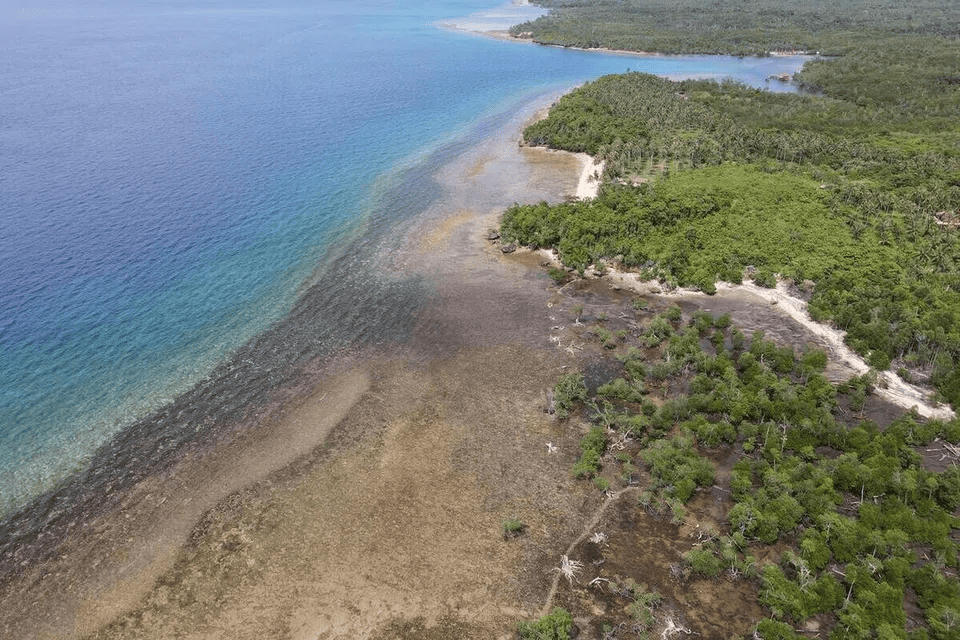
(Photo credit: Kymry Delijero/WWF-Philippines)
Source: The Straits Times
A local conservation organisation has started a three-year initiative to tackle key barriers in conserving and restoring mangroves, peatlands and seagrass habitats across Asia, so they can yield carbon credits.
On Jan 15, the World Wide Fund for Nature (WWF) Singapore launched its Blue Carbon Support Programme, which aims to unlock new technologies and solutions to solve issues around estimating the amount of carbon stored in marine ecosystems, reaching remote habitats and improving the survival of planted saplings.
The new programme is backed by the Economic Development Board (EDB).
Blue carbon ecosystems, such as mangroves, sea grasses, peatlands and coastal wetlands, can store carbon up to four times more efficiently than forests on land.
One carbon credit represents one tonne of planet-warming carbon dioxide (CO2) that such habitats remove or prevent from being released into the atmosphere.
South-east Asia has lost more than 30 per cent of its mangroves over the past 40 years, and restoring them has not been easy.
“Existing mangrove projects are notorious for having a very high failure rate,” said Mr Rueban Manokara, global lead of the carbon finance and markets task force at WWF.
Globally, 50 per cent of such projects fail because of high sapling mortality, poor project design and lack of scalability, he added, speaking at the launch of the new programme at a Carbon x Tech event.
Another challenge lies in accurately measuring the carbon stored in marine habitats and tracking how much carbon is sequestered from a restoration project over time. If a project overestimates the actual amount of CO2 removed from a site, it affects the overall credibility of the credits generated.
EDB’s executive vice-president Lim Wey-Len noted that calculating carbon stored relies on labour-intensive sampling that is prone to errors. And in marine ecosystems, up to two-thirds of the carbon is found in the seabed, adding to the complexity.
One seagrass meadow may also store a different amount of carbon compared with a similar plot elsewhere.
“Mangroves also accumulate carbon more slowly, and require long-term monitoring to capture changes in their carbon stock. This is where technology can be transformative,” added Mr Lim at the event at Temasek Shophouse in Orchard Road.
With the new programme, WWF-Singapore will partner selected technology start-ups, research organisations and carbon project developers to address the key barriers.
Regionally, WWF works on 47 mangrove sites, mainly in the Philippines and Indonesia.
Project developers will receive training to improve their projects, while novel solutions for tracking carbon and biodiversity, and involving local communities, will be tested.
To reduce sapling deaths at some of the sites, WWF is mimicking the way mangrove forests work at the plant nurseries. At plots in Malaysia, this has helped to raise the survival rate of the saplings to 90 per cent, said Mr Manokara.
The aim of the new programme is to scale up and sustain the success of such solutions across restoration sites.
New livelihoods can also be created through seaweed farming and having the community patrol the project sites, Mr Manokara added.
On a related note, Singapore’s space office under the EDB launched a grant call on Jan 15, seeking new ways to measure carbon, or biomass, in various habitats by using satellites, geospatial solutions and other space technologies.
It is important to measure biomass accurately to calculate the amount of carbon stored in a particular area, and to then verify carbon credits.
Satellite remote sensing gets around some of the limitations in calculating carbon, and geospatial data can provide comprehensive observations across vast areas.
Under the grant, the Office for Space Technology and Industry wants research institutes with expertise in satellite technologies, artificial intelligence modelling and carbon science to develop digital methods that meet the technical challenges of estimating biomass in South-east Asian ecosystems.
Industry partners like project developers and satellite operators will co-fund at least 30 per cent of each selected project, and ensure the new solutions are scalable and economically viable.
The aim of both the support programme and the space office’s grant is to ensure that blue carbon projects can grow to a viable scale and attract investment.
In a panel discussion, Mr Sandeep Roy Choudhury, co-founder of carbon project developer VNV, said more comprehensive data about how a project site is removing and storing CO2 would make for better financial models. This then improves the business case for blue carbon projects.
But new technologies also need to come at “a cost that makes sense” to prevent the cost of blue carbon credits from becoming prohibitively expensive for buyers, and also to prevent high costs from affecting the benefits to the local community.
Only about 0.2 per cent of credits available on the voluntary carbon market come from blue carbon habitats, and one credit costs around $30, up from less than $10 in 2023.
If revenue can be generated for marine ecosystems through selling carbon credits, they can provide their own financial incentives for conservation rather than be cut down for illegal agriculture and aquaculture.
Unlocking blue carbon projects in the region has become a priority for WWF-Singapore and EDB.
In September 2025, these two organisations played a role in launching an innovation challenge – Blue Catalyst – to unlock technological solutions to better protect and restore marine and coastal habitats.
Applications for the challenge are open until end-February, and new technologies born from it will be piloted in the new Blue Carbon Support Programme.
Singapore estimates it will use high-quality carbon credits to offset about 2.51 million tonnes of emissions a year over this decade. In 2030, the country’s total greenhouse gas emissions are expected to be 62.51 million tonnes and will be brought down to 60 million tonnes with the use of carbon credits.
The blue carbon initiatives are also aimed at helping the country realise its vision of becoming a carbon services and trading hub.