
Green jet fuel costly, but securing demand is key to wider adoption: Industry leaders
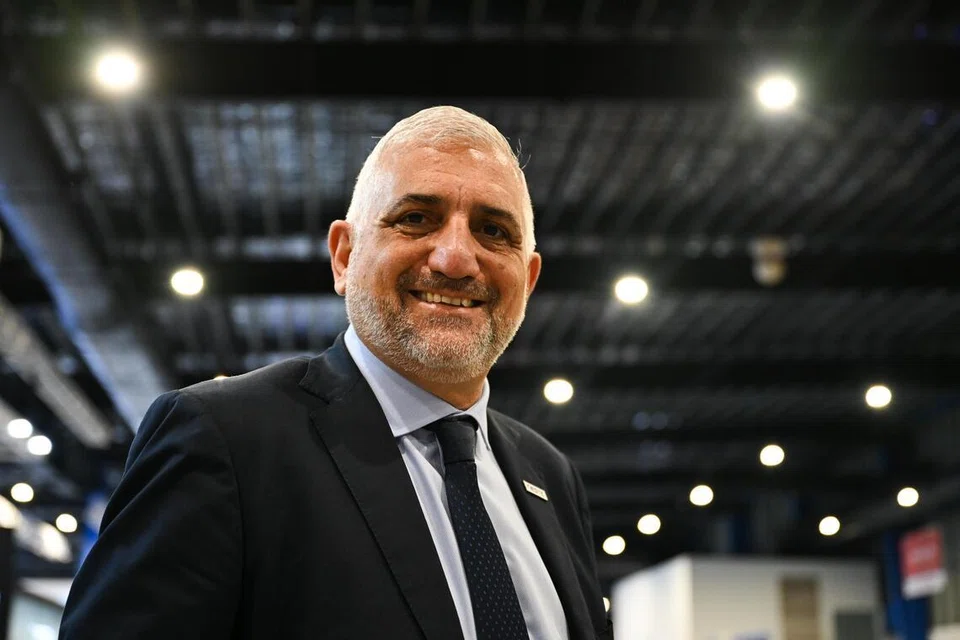
(Photo credit: ST Photo/Shintaro Tay)
Source: The Straits Times
The levy that will be imposed on all passengers flying out of Singapore from Oct 1 will be a model that other countries look to when it comes to adopting green fuel.
What the Republic does, especially in things like the aviation sector, will be emulated by others and that will get the ball rolling, Mr Mario Mifsud, vice-president for sales and trading of renewable fuels for Europe, the Middle East and Africa as well as the Asia-Pacific region at sustainable aviation fuel producer Neste, told The Straits Times.
The levy was one of the talking points during a panel on sustainable aviation on Feb 4, the second trade day of the Singapore Airshow 2026, when discussions on sustainable aviation fuel, or SAF, took centre stage.
While the fuel is expected to play a crucial role in reducing emissions by the aviation sector to achieve its net-zero target by 2050 – around 65 per cent according to estimates by the International Air Transport Association (IATA) – its adoption has been sluggish.
Budget carrier Scoot’s chief executive Leslie Thng on Feb 3 attributed this to a cost issue, citing how green fuel costs two to four times more than fossil fuels, which is “something that we don’t think the industry can afford”.
Similarly, IATA director-general Willie Walsh said at the Changi Aviation Summit on Feb 2 that mandating the use of green fuel has “pushed prices higher, which has just discouraged voluntary demand and reduced output”.
But Mr Mifsud said this problem can be solved by ensuring there is demand for the more sustainable option. He noted: “My preoccupation is demand. As we grow demand and create certainty for it, investors will come.”
To create this demand, the use of green fuel has to be mandated, as Singapore is doing, he added.
With greater investments, production for green jet fuel can be scaled up, allowing prices to eventually normalise.
Agreeing with Mr Mifsud, Mr Oliver Haas, head of sustainability, commercial and innovation at Hong Kong airline Cathay Pacific, said that price is not the fundamental issue affecting adoption; it is how demand can be secured.
In that aspect, he noted that Singapore’s imposition of the levy was “moulding” demand into policy, which he expects to be effective.
Starting Oct 1, passengers flying out of Singapore will pay an additional $1 to $41.60 as a levy.
Those in economy or premium economy class will pay between $1 and $10.40, depending on their destination. Passengers in business or first class will pay between $4 and $41.60. Travellers who fly farther will pay more because longer flights consume more fuel.
The Republic is targeting SAF to form 1 per cent of all jet fuel used at Changi and Seletar airports in 2026, with the levy remaining fixed as long as the target amount does not change.
However, by 2030, Singapore aims to have the green jet fuel account for 3 per cent to 5 per cent of all jet fuel used at airports here.
While this is dependent on global developments, as well as the availability of SAF, which is mostly made from waste materials like used cooking oil, the levy amount will be re-examined a few years later.
When asked if passengers may baulk at more expensive flight tickets, Mr Mifsud said: “We are paying for travel that is sustainable. At the end of the day, it is about the planet, and that is priceless.”